

São Paulo, Brazil — An extratropical cyclone hit São Paulo, Brazil, last week leaving over 1 million without power. Trees fell across the country’s largest city and hundreds of flights were canceled.
At the time of publication, São Paulo had not returned to 100% of its power capacity. National media outlets reported over 400 flights had been cancelled while the cyclone passed through last Thursday.
Brazil’s National Electric Energy Agency (Aneel) issued a statement on Tuesday to the electricity distribution companies operating in the states of São Paulo and Rio de Janeiro, reinforcing contingency plans to guarantee the continuity of the electrical supply during the coming days.
Tercio Ambrizzi, a professor in the Department of Atmospheric Sciences (DAS) at the University of São Paulo (USP), told Brazil Reports that cyclones are formed due to high and low pressure systems and temperature difference between the tropical region, which is much warmer, and the polar region, which is much colder.
“Scientists and the scientific community have been saying that with the increase in average global temperature, extreme events will become increasingly intense and more frequent, and there is a certain lethargy,” he said, adding that state and local governments have been “slow” to try to prevent damage from increasingly harsh weather.
Ambrizzi believes the country should invest more in contingency plans in addition to energy transition, aiming to reduce the damage caused by climate-related events.
Cristina Malcov, a 67-year-old woman who lives in Southern São Paulo, had to leave her apartment on Friday due to a power cut caused by the cyclone.
She also agreed that Brazil needs to have a more structured plan in place to deal with these types of climate emergencies.
“What needs to be done is an emergency plan for the largest capital city in the country. Any rain or wind causes the lights to flicker, the internet to go down, and we all pay for these services,” she told Brazil Reports from her son’s house in Interlagos, a region 35 minutes away from São Paulo’s downtown. Malcov said that her apartment’s power returned on Saturday.
Enel, the Italian energy company that supplies São Paulo and two other states in Brazil, has received criticism in the past from Brazilians for its poor performance when extreme weather hits. Some politicians, including São Paulo Mayor Ricardo Nunes and Governor Tarcísio de Freitas, are calling for the federal government to “intervene” in Enel’s concession to distribute electricity, which expires in 2028.
Other politicians, like the Deputy Sâmia Bonfim, filed a request to the public prosecutor’s office to terminate Enel’s concession.
The company updated the public with a statement on Monday. “Currently, our technicians are in the field addressing cases registered in the days following the weather event, representing approximately 0.4% of customers in the São Paulo Metropolitan Region. Our technicians continue to work on some more complex network reconstruction cases, involving the replacement of cables, poles, and other equipment.” The company said that 99% of power had already been restored.
Featured image credit:
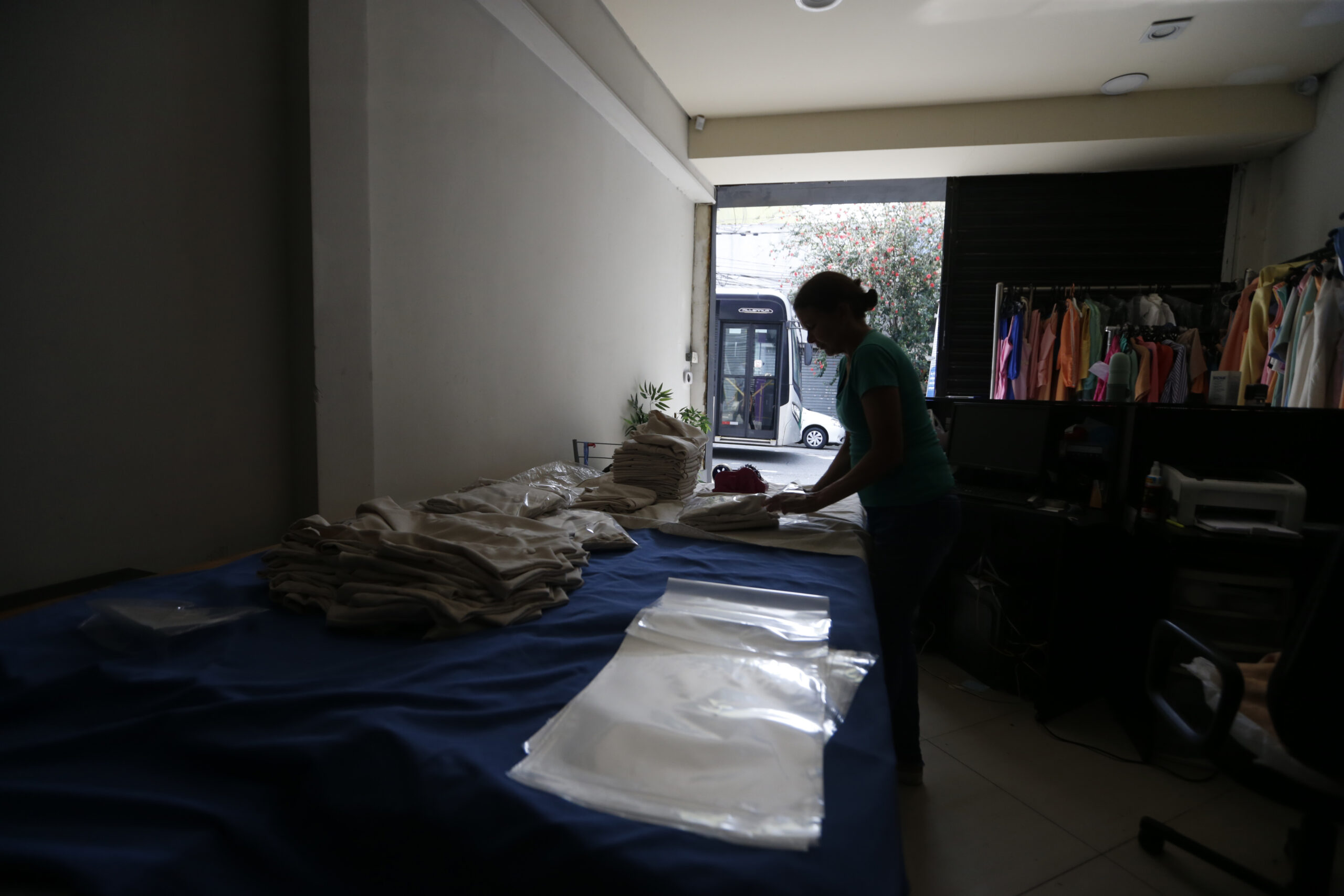
Image: Streets in the Bom Retiro neighborhood in São Paulo with factories and shops have been without electricity since Friday due to the rains.
Source: Paulo Pinto/Agência Brasil