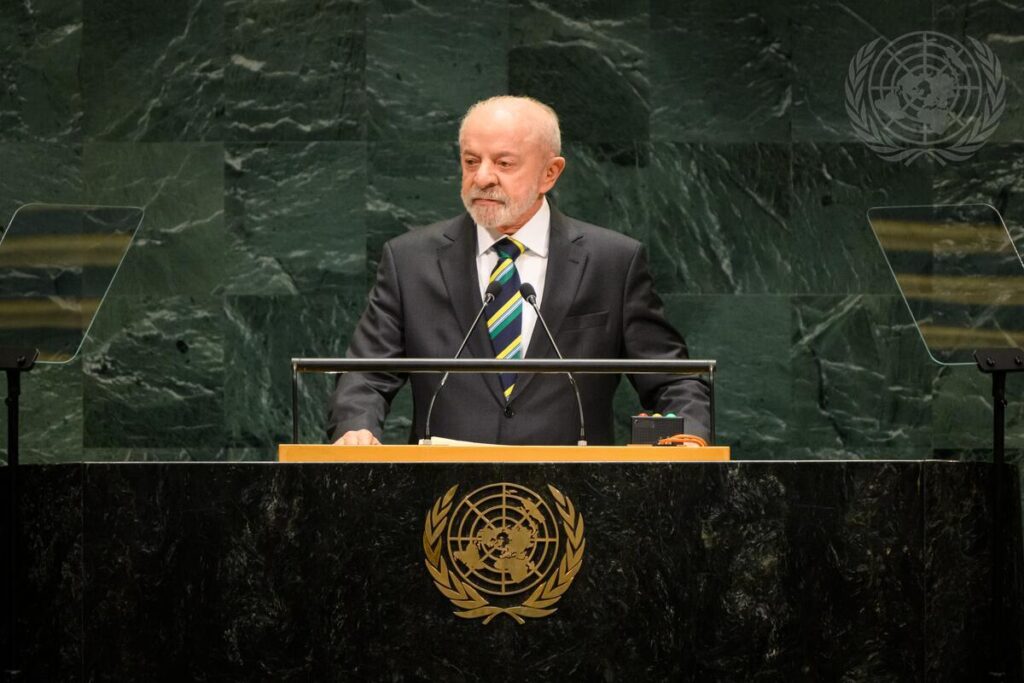


President Luiz Inácio Lula da Silva won an unprecedented fourth term over right-wing senator Flávio Bolsonaro in last week’s runoff election. Climate activists are celebrating his victory as a win for the fight against global climate change, but experts warn that a rightward shift in Brazil’s Congress could still leave the rainforest under threat.
About 60% of the Amazon lies within Brazil, which gives the country’s environmental policy an outsized global impact.
Scientists warn that if deforestation and drought push the forest past a “tipping point,” large parts of it could dry out, stop absorbing carbon dioxide and start releasing it instead.
Record low for deforestation
In Lula’s third term, Amazon deforestation dropped to its lowest level since monitoring began in 1988. Data from Brazil’s National Institute for Space Research (INPE) put forest loss between August 2025 and July 2026 at 41.8% less than the year before and a Carbon Brief analysis estimates that Lula’s policies have kept at least 20,000 square kilometers of forest standing since he returned to office in 2023.
Under Jair Bolsonaro, Flávio’s father, who governed from 2019 to 2022, deforestation rose about 60% compared with the previous four years. Mirroring his father’s style, the younger Bolsonaro had framed himself as a climate skeptic and favored agribusiness and mining.
Congress moving right
Despite Lula’s victory, Bolsonaro’s Liberal Party (PL) won the most seats in both chambers of Congress in the first round of general elections on October 4.
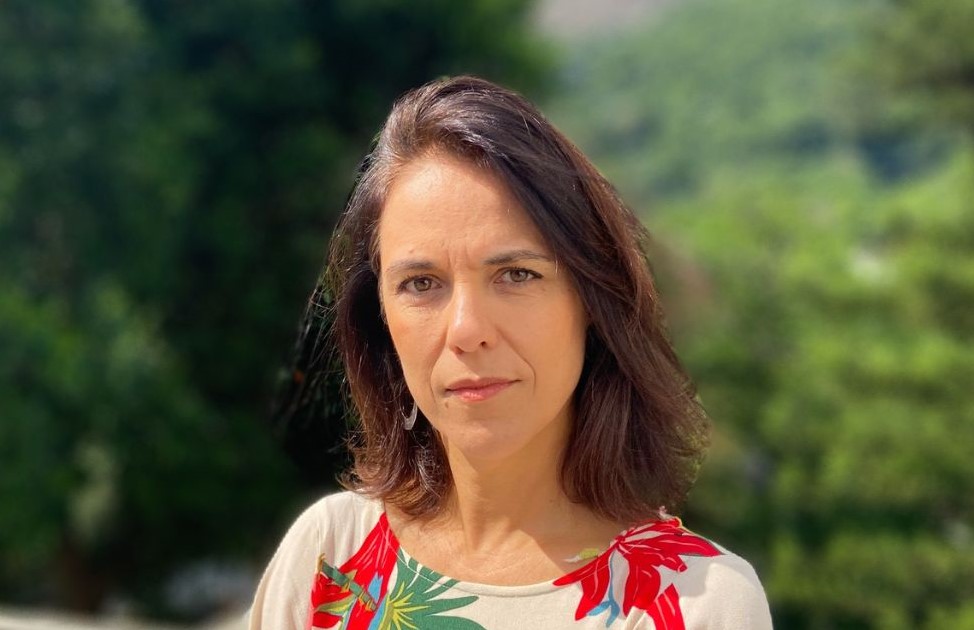
The overall balance of power barely moved, since center and right-wing parties still hold around 80% of seats, but “there has been an important shift in the composition of Congress,” Cristina Leme Lopes, a senior research manager at Climate Policy Initiative (CPI) told Brazil Reports.
The parties of the Centrão, Brazil’s pragmatic, deal-making center bloc, have lost ground to more ideological ones, she said. The biggest gains went to the PL, which has “a history of positions that are strongly opposed to environmental protection measures.”
The climate advocacy network Observatório do Clima found that nearly 70% of incoming lawmakers have low commitment to environmental issues. All 28 senators the PL will hold in the new Senate were rated “very low.”
Lopes stressed that the PL’s influence could shape more than just how lawmakers vote. It could also decide which bills get priority, who chairs committees and how quickly proposals move.
“I expect greater legislative pressure to weaken environmental policies, with some proposals potentially moving through Congress very quickly, leaving less room for public hearings and civil society participation,” she said.
Land grabbers encouraged
According to Lopes, the rules most at risk cover mining on Indigenous lands (including gold mining), protected areas, deforestation monitoring and enforcement, the Forest Code, and land tenure regularization.
Brazil has about 48 million hectares of undesignated public forest, according to 2025 data from the Brazilian Forest Service, much of it located in the Amazon.
“Legislative changes do not necessarily need to be approved to have consequences on the ground,” she said.
Simply putting these proposals into political debate can create expectations that “currently prohibited activities may become legal or that illegal occupations may eventually be regularized,” she added, and that “can encourage invasions of protected areas, land grabbing, and deforestation.”
The future of climate finance
Brazil hosted COP30 in Belém last year, where President Lula put his fight to protect the Amazon on the world stage.
Additionally, the Amazon Fund, established in 2008, is managed by Brazil’s development bank (BNDES) and financed mostly by foreign donors. After it experienced a temporary suspension of donations during the Bolsonaro administration, it approved a record R$1.3 billion (around USD $236 million) in 2023, Lula’s first year back. In October, the Netherlands pledged up to USD $ 500 million over ten years to the Tropical Forest Forever Facility (TFFF).
Lopes sees two forces pulling in opposite directions. Lula’s re-election “sends an important signal to the international community about the continuity of Brazil’s environmental policies,” which could help attract climate finance, she said.
But the new Congress “could influence funders’ confidence and Brazil’s ability to turn these resources into concrete environmental results.”
As more ideological parties gain ground, the debate over environmental policy often turns on its supposed cost to the economy, especially agribusiness. Lopes points to a CPI study that found after the country launched its federal anti-deforestation plan (PPCDAm) in 2004, Amazon deforestation fell 82% between 2004 and 2014, while soybean production rose 94% and the cattle herd grew 14.7%.
The forest regulates rainfall that farms depend on, she said. “Protecting the Amazon should not be seen as an obstacle to economic growth.”
A system of checks and balances through the executive and judiciary ensures congress “does not determine the future of environmental policy on its own,” Lopes added.
Lula begins his fourth term on January 5, and the new Congress is seated in February.
“It will be increasingly important to monitor legislative developments closely,” she concluded.
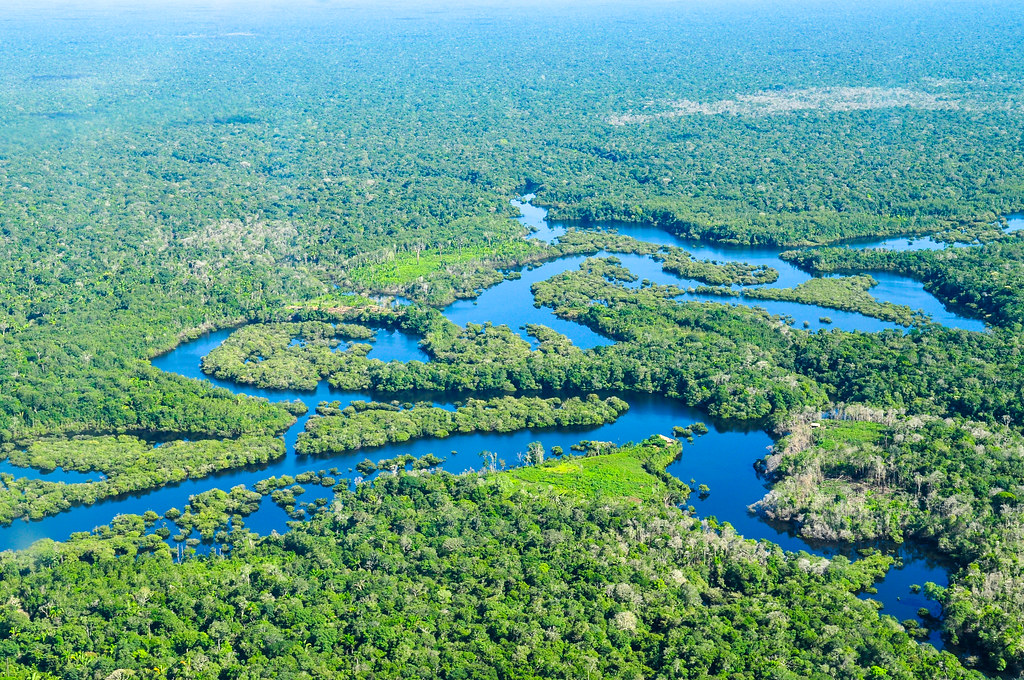
Featured image: Aerial view of the Amazon Rainforest, near Manaus, the capital of the Brazilian state of Amazonas, Brazil.
Image credit: Neil Palmer/CIAT via Flickr. https://creativecommons.org/licenses/by-nc-nd/2.0/