
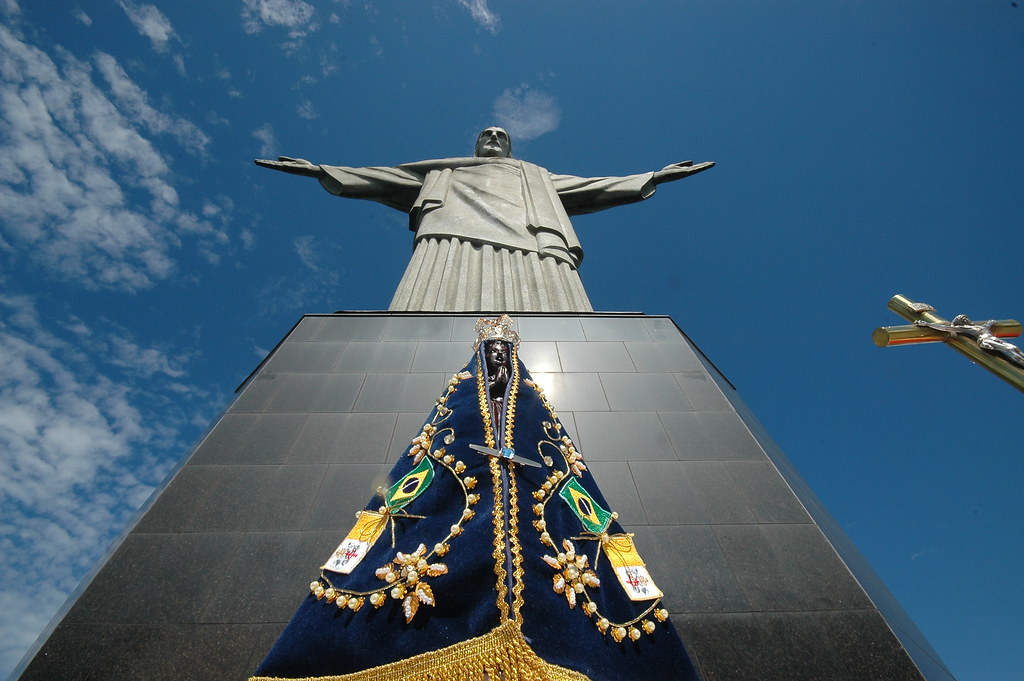
São Paulo, Brazil – A small statue of the Virgin Mary, found by fishermen in a river over three centuries ago, is now at the center of a dispute in Brazil’s presidential election.
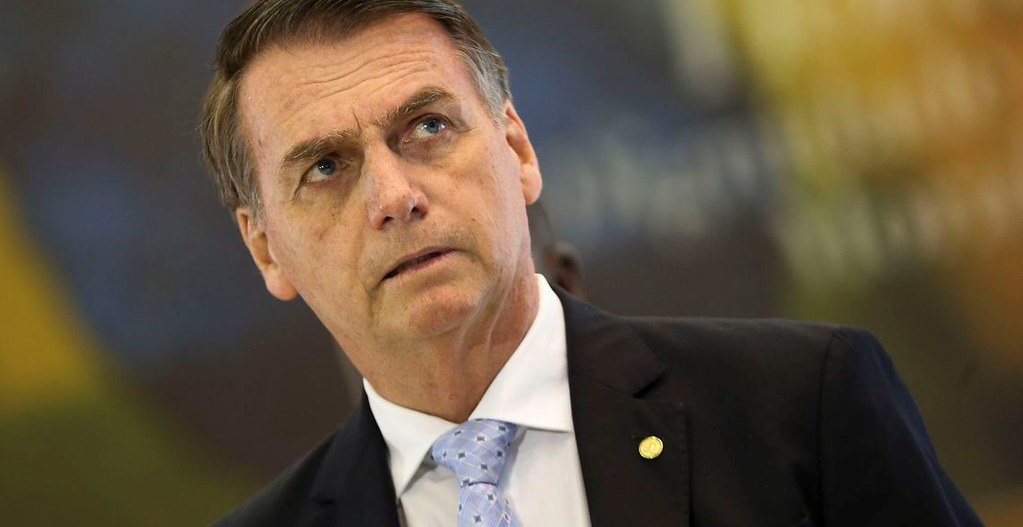
The controversy began with claims that Flávio Bolsonaro, the evangelical senator running for president for the Liberal Party, intended to strip Our Lady of Aparecida of her title as patron saint of Brazil if elected. There is no current bill backed by Bolsonaro to do so, nor is there evidence that he has proposed such a measure. The claim spread across social media in the final days before the first round of voting this Sunday.
Catholics accounted for 56.7% of Brazilians aged 10 or older in the 2022 census, or about 100 million people. Their share of the population has fallen considerably as evangelical churches have expanded, but Brazil remains home to the world’s largest Catholic population.
Our Lady of Aparecida has been formally recognized by Brazilian law as the country’s patron saint since 1980, and October 12, her feast day, is a national holiday.
The devotion dates to 1717, when fishermen found a small clay image of the Virgin Mary in the Paraíba do Sul River in the state of São Paulo. Aparecida subsequently became one of the most important Catholic pilgrimage sites in Latin America.
The claim about Bolsonaro can be traced in part to a proposal introduced almost two decades ago, but not by him. In 2007, then-congressman Victorio Galli introduced a bill that would have replaced the expression “patron saint of Brazil” in federal law with “patron saint of Brazilian Roman Apostolic Catholics.”
Galli argued that a secular state should not have an official patron saint. The proposal was archived in August 2008 and never became law. Years later, Galli served as a special adviser in the administration of Flávio’s father, former President Jair Bolsonaro.
The proposal resurfaced after a separate statement by Flávio Bolsonaro. In August, while explaining why he would not attend a presidential debate, he said that one of his first acts as president would be to “decree that Brazil belongs to the Lord Jesus Christ.” His campaign has since said the statement was symbolic, referring to a prayer he intends to make before taking office rather than an official government measure.
There is no evidence connecting that statement to an effort to change the status of Our Lady of Aparecida.
The controversy received national attention on September 24 after GloboNews commentator Maria Cristina Fernandes referred on air to a reaction within the Catholic Church against evangelical groups supposedly seeking to remove Aparecida’s status as patron saint. GloboNews later corrected the report and apologized.
Bolsonaro responded that night. “This is a huge lie. It makes no sense. This project does not exist,” he said.
Bolsonaro accused supporters of President Luiz Inácio Lula da Silva, his main opponent in the election, of spreading the claim. He later alleged that people within the National Conference of Bishops of Brazil, known as the CNBB, had helped circulate it.
The CNBB rejected the accusation, saying it had neither produced nor authorized false information about the election and that claims made without evidence unfairly targeted the institution. Bolsonaro later thanked the bishops’ conference for publicly stating that it had no connection to the story.
The Catholic Church had already addressed the election earlier in September. In a September 7 message, the CNBB called on Brazilians to vote “with conscience, without manipulation, corruption or instrumentalization of faith,” defended democracy and national sovereignty and ended the document by entrusting Brazil with the protection of Our Lady of Aparecida.
The statement did not endorse a candidate. Lula, who is Catholic and has repeatedly criticized the political use of religion, also began referring to Marian devotion as the controversy spread.
At a campaign event in São Paulo on September 26, “Nossa Senhora,” a song written by Roberto Carlos and Erasmo Carlos in honor of the Virgin Mary, was played before Lula’s campaign walk. The following day, Lula was asked about the claim involving Bolsonaro during an interview and initially said he did not know whether it was false.
“What is concrete is that this is very strong on social media,” Lula said. He added that Our Lady of Aparecida would remain Brazil’s patron saint and called for respect among religions.
Lula also referred to a 1995 incident involving a bishop from the Universal Church of the Kingdom of God, who kicked and struck an image of Our Lady of Aparecida during a televised broadcast. The episode caused widespread outrage in Brazil, which at the time had a substantially larger Catholic majority, and remains one of the country’s best-known religious controversies.
On Monday, Lula held up an image of Our Lady of Nazaré during a campaign event in Belém. Bolsonaro, meanwhile, appeared with an image of Our Lady of Aparecida during an event in São Paulo and again denied any intention of changing her status. Both candidates used Catholic imagery at campaign events.
A dispute between Brazil’s highest courts
Bolsonaro’s campaign went to the Superior Electoral Court, or TSE, seeking the removal of posts associating him with an attempt to strip Aparecida of her title. On September 25, Justice André Mendonça ordered social media platforms to remove posts containing the claim.
The order ultimately reached more than 1,000 links and posts, including some that did not state as fact that Bolsonaro intended to change the saint’s legal status. That broader application became the source of a dispute over where the removal of false electoral information ends and protected political speech begins.
Two days later, Supreme Court Justice Flávio Dino intervened after a request from Brazilian comedian and writer Antonio Tabet, whose post had been removed. Tabet had published an image of the saint accompanied by a reference to the Bolsonaro family hating black women. Dino concluded that the publication did not justify restricting freedom of expression and ordered the affected posts restored.
Bolsonaro’s campaign appealed. Supreme Court Justice Luiz Fux on Monday suspended Dino’s ruling, restoring the effects of Mendonça’s order until the Supreme Court considers the case. Fux questioned whether freedom of expression could be used to justify keeping information already established as false online.
Mendonça has since narrowed at least one application of his original order. On Tuesday, he allowed a post by federal lawmaker Erika Hilton to remain online after concluding that her publication did not state that Bolsonaro supported removing Aparecida’s title. Instead, Hilton referred to the 2007 bill and warned about the possibility of the issue returning under Bolsonaro and his allies. Mendonça described the post as conditional and prospective.
The case returned to the TSE on Wednesday. Court President Kassio Nunes Marques called an extraordinary virtual session for the seven-member court to review Mendonça’s decision. The session began on September 30 and is scheduled to run until October 2.
The TSE must now decide whether to uphold the removal order and how far it can extend beyond posts that explicitly present the allegation against Bolsonaro as fact. The Supreme Court, meanwhile, will not decide the issue on Wednesday. Chief Justice Edson Fachin left the case off the court’s September 30 agenda, with no new date set for the Supreme Court to consider the competing decisions. Fachin has indicated that the electoral court should first have an opportunity to rule on the matter.
Nunes Marques had complained about what he considered interference by the Supreme Court in a matter being handled by the electoral justice system. Dino and Fux, in turn, issued opposing rulings on how far the TSE order could reach.
The legal question now extends beyond whether the original allegation about Bolsonaro was false. The courts are also deciding whether an order aimed at false electoral information can reach satire, political criticism or statements about what a candidate might do in the future.
Outside the courts, the controversy remains part of the campaign. Bolsonaro has cited the episode as evidence that false information is being used against his candidacy. Lula has reaffirmed the legal status of Our Lady of Aparecida and brought Catholic imagery into campaign events.
The bill cited throughout the controversy was introduced in 2007, archived in 2008 and has not been revived by Flávio Bolsonaro.
Featured image: Nossa Senhora Aparecida e o Cristo Redentor.
Image credit: Jovenes Conectados via Flikr. Usage rights.